
Friendly Helper or Digital Menace? The Story of BonziBuddy
June 2, 2026

If you owned a computer in the late 1990s, you likely remember a purple gorilla named BonziBuddy. He would appear on your desktop with a friendly wave and offer to help you navigate the confusing world of the early internet. To a kid in 1999, he felt like a futuristic digital friend. To a computer security expert, he was one of the most successful pieces of adware in history.
From a Green Parrot to a Purple Gorilla
BonziBuddy was released in 1999 by a company called Bonzi Software. Interestingly, the gorilla we all remember was not the original mascot. The first version of the software featured a green parrot named Peedy. This parrot was actually a pre-made character created by Microsoft.
Both Peedy and the later gorilla utilized a technology called Microsoft Agent. This was a set of software tools that allowed developers to create interactive, talking characters on the Windows desktop. When Bonzi Software decided they wanted a unique mascot that they could own entirely, they replaced the parrot with the iconic purple gorilla.
What Did BonziBuddy Actually Do?
The appeal of BonziBuddy was simple: he was an all-in-one digital assistant. He used a text-to-speech engine to speak to you in a robotic, high-pitched voice. He could tell jokes, share "fun facts," and even sing songs like "Daisy Bell."
Beyond the entertainment, he offered practical tools. He could manage your downloads, read your unread emails aloud, and search the web alongside you. For many users, it felt like having a personality-driven version of the Windows Start menu.
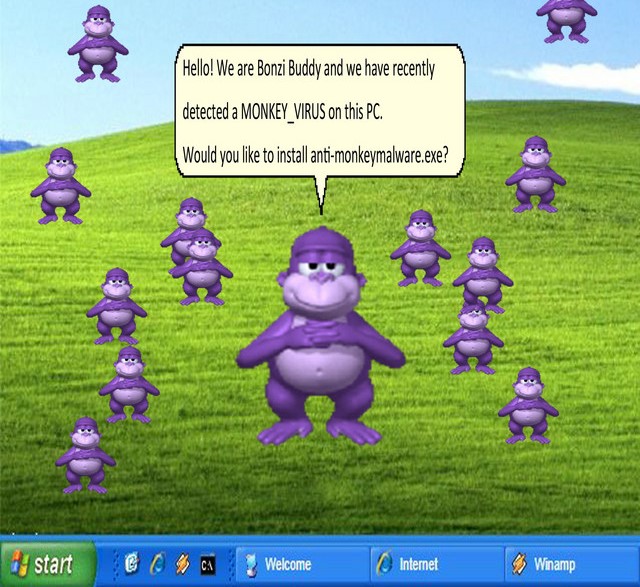
The Hidden Cost of Friendship
The software was free to download, but it came with a heavy price. BonziBuddy is now classified as spyware and adware. While you were listening to his jokes, the software was busy tracking your browsing habits and reporting that data back to Bonzi Software.
He was also famous for being nearly impossible to get rid of. The program would often reinstall itself or change your browser's homepage and search engine without your consent. It frequently bypassed security prompts, which led to it being flagged by early antivirus programs as a security threat.
The Legal Battles and the FTC
The downfall of BonziBuddy was not caused by a virus, but by the law. In 2004, the Federal Trade Commission (FTC) took action against Bonzi Software. The company was ordered to pay a 75,000 dollar fine for violating the Children's Online Privacy Protection Act (COPPA).
The software had been collecting personal information from children under the age of thirteen without parental consent. This legal pressure, combined with the growing effectiveness of anti-spyware tools, eventually forced BonziBuddy into retirement. The official servers were shut down in 2005.
A Modern Cultural Icon
Today, BonziBuddy has undergone a strange transformation. He is no longer a feared piece of malware. Instead, he has become a nostalgic meme. He represents a chaotic era of the internet where the rules were still being written and the "Skip" button did not exist.
At Quenq, we believe even the "villains" of software history deserve to be preserved. If you want to see what it was like to have this purple gorilla take over your screen without actually risking your own computer, you can find a simulated version of him inside our App Market.
Click here to launch Reborn XP and find BonziBuddy in the App Market.